VigiaBOX / Data acquisition, logging, and telemetry

Logs in the field.
Delivers where you decide.

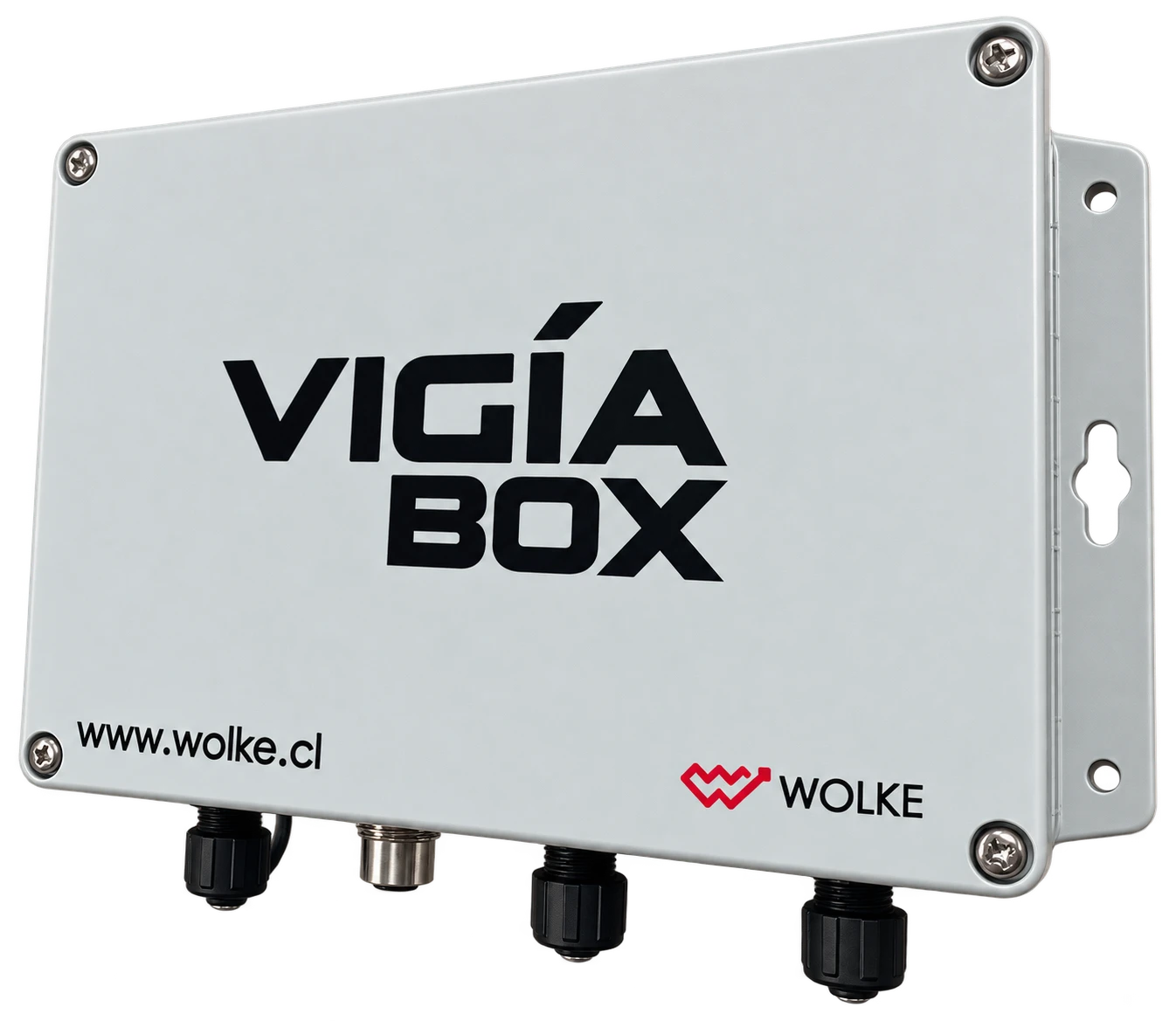
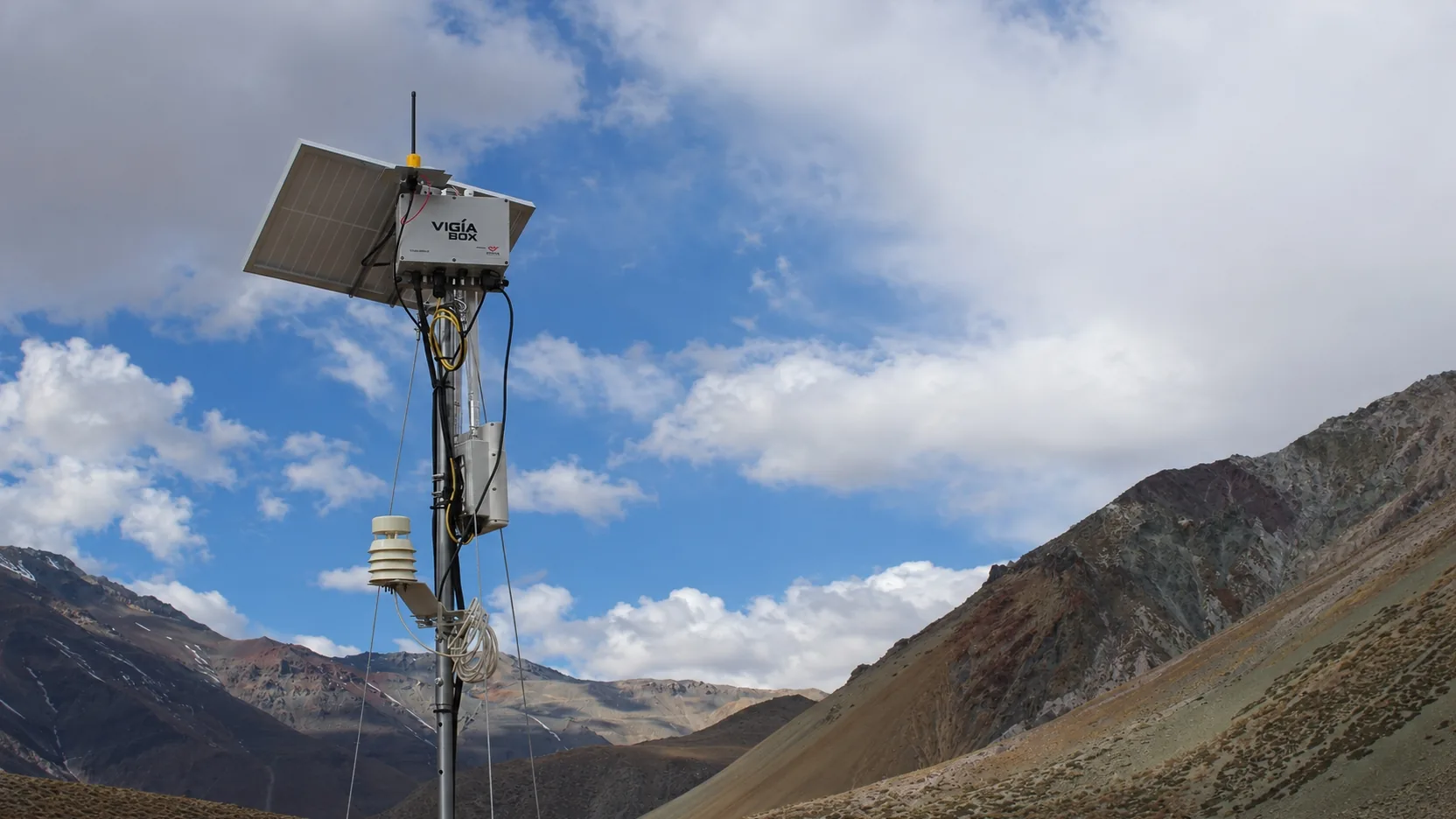
VigiaBOX is our family of data acquisition, logging, and telemetry devices: an RTU, a data logger, and a modem in a single unit.

It reads instruments from different manufacturers, stores every measurement on site, and transmits it over 4G, LoRaWAN, or satellite. If the link drops, it resends what is pending when the connection returns.

Equipo VigiaBOX de Wolke
VigiaBOX
RTU + data logger + modem4–20 mA · 0–25 V · pulse inputsSDI-12 · Modbus4G · LoRaWAN · IridiumLocal logging and store-and-forwardIP68 · IP69K
01 / The family

A form factor for every site, the same foundation inside.

Core, NEO, and Plus are one family: they log and deliver data the same way. What changes is the form factor: a powered cabinet, a remote spot with a solar panel, or an exposed installation.

VigiaBOX

Core

Compact DIN-rail RTU

For control cabinets and enclosures: plenty of inputs in a small footprint, output relays, and Modbus instrument polling.

  • 7 analog and 4 digital inputs
  • Modbus RTU and TCP · 1-Wire
  • 9–36 VDC · −30 a +60 °C
  • 92 × 99 × 50 mm · under 200 g
VigiaBOX

NEO

Self-powered field unit

Battery and solar panel, IP68, plus 4G and satellite in the same unit: if one network goes down, the data goes out over the other.

  • 4 analog and 2 digital inputs
  • SDI-12 · Modbus RS-485
  • Up to 26,000 records
  • Average draw under 0.1 W
VigiaBOX

Plus

For extreme conditions

IP69K protection, an integrated TitanPower supply, and inputs with up to 18-bit resolution. Also available in a Standard version, rated IP68.

  • 4 analog (18-bit) and 3 digital inputs
  • Internal temperature, humidity, and pressure
  • 43,800 records or more
  • LoRaWAN · optional 4G, Iridium, and Ethernet
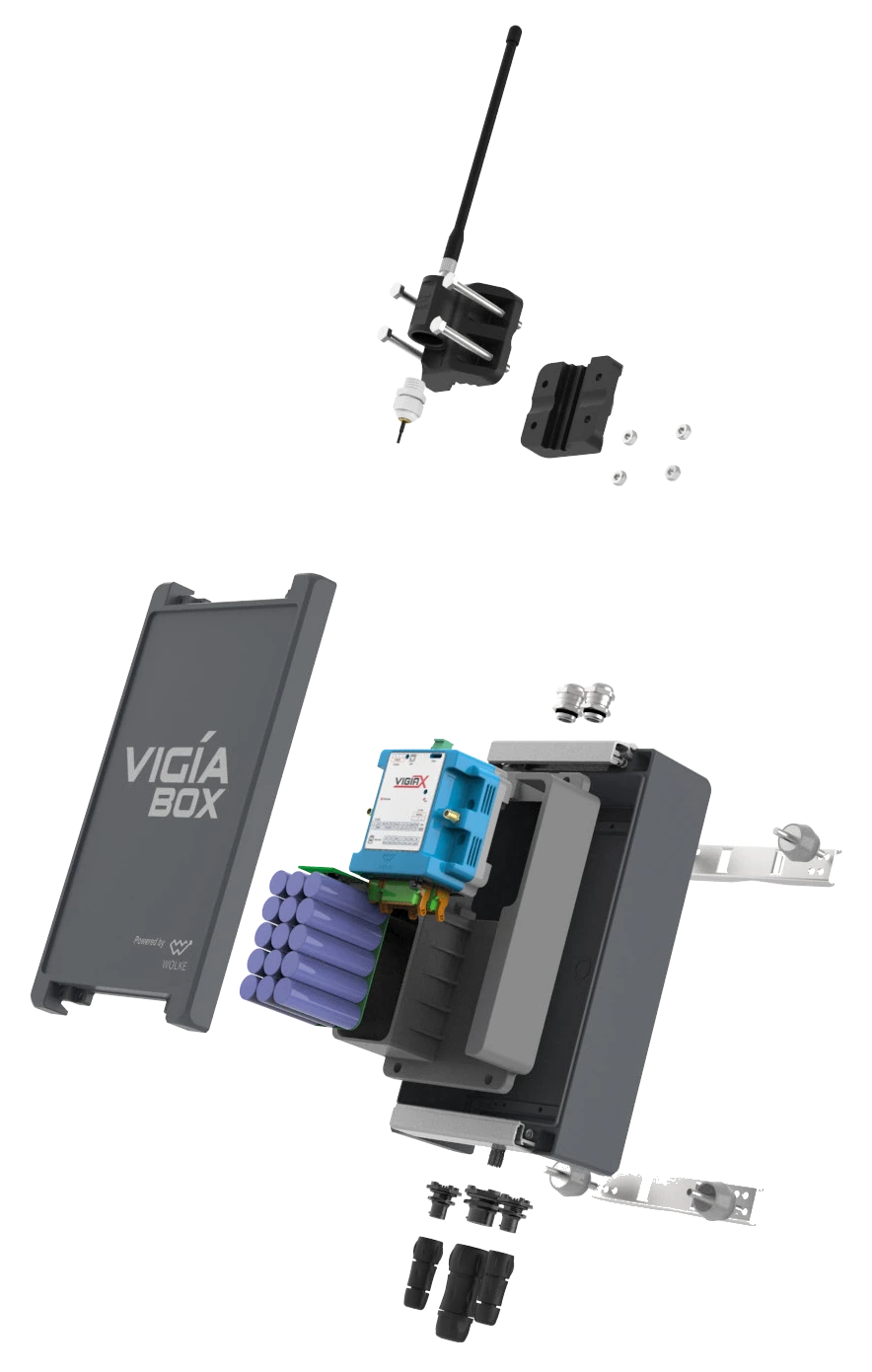
Vista explotada de VigiaBOX Plus: antena y soporte, tapa, electrónica, banco de energía TitanPower, caja con soportes a poste y conectores
VigiaBOX Plus

Built to last, inside and out.

Designed to operate in exposed sites with as little maintenance as possible.

  • IP69K enclosureMaximum protection against dust and water; withstands humidity, vibration, and temperatures down to −30 °C.
  • Built-in TitanPower energyLong-lasting power source inside the enclosure; also accepts a solar panel or external battery.
  • Up to 5 years of dataNon-volatile memory for 43,800 records or more, synced when the link comes back.
  • Best available network, hands-freeUses 4G where there is coverage and switches to Iridium where there isn't; LoRaWAN for local links.
  • Pole mountingFixed with its own brackets; the antenna has a separate mount.
02 / In the field

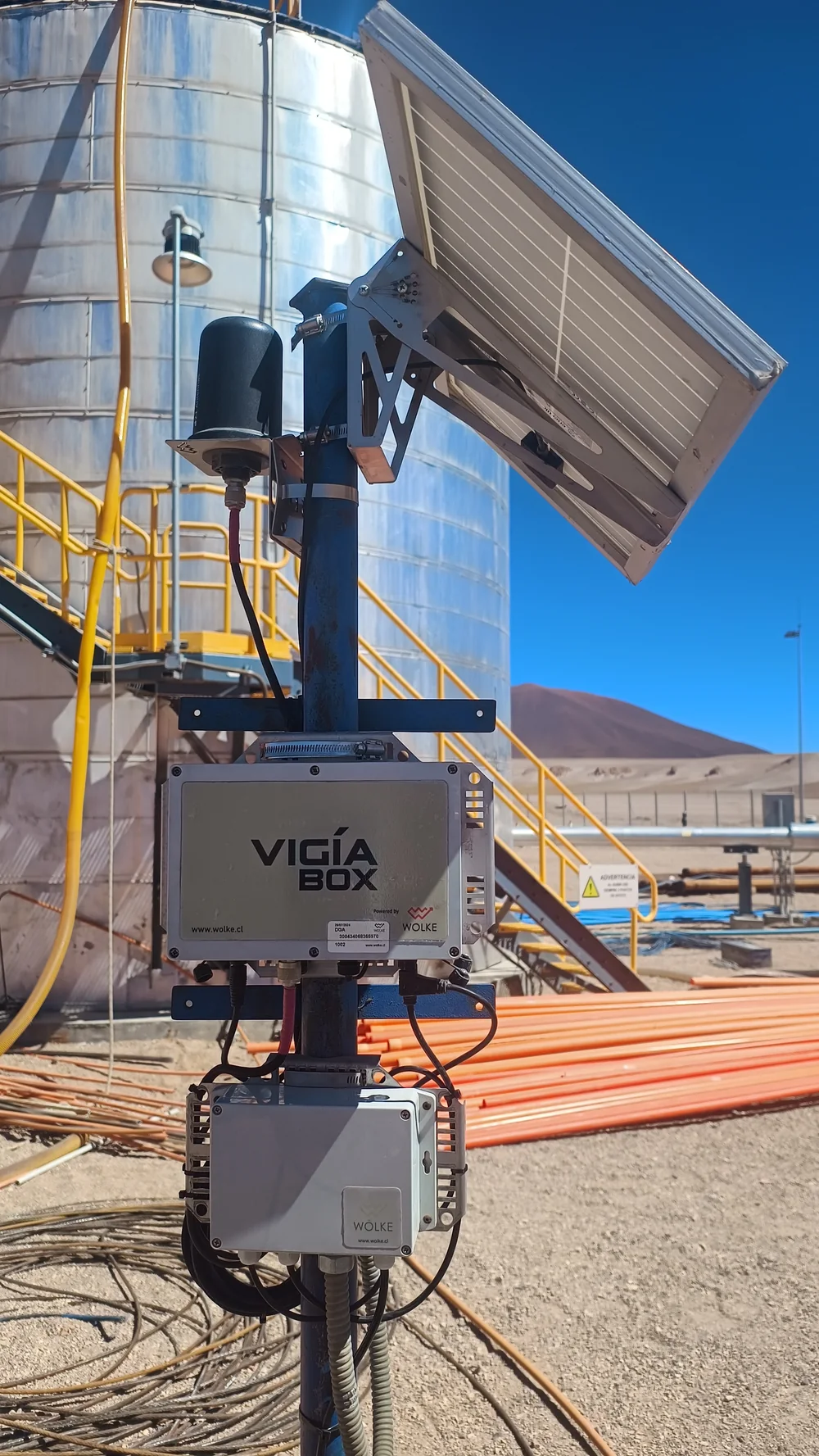
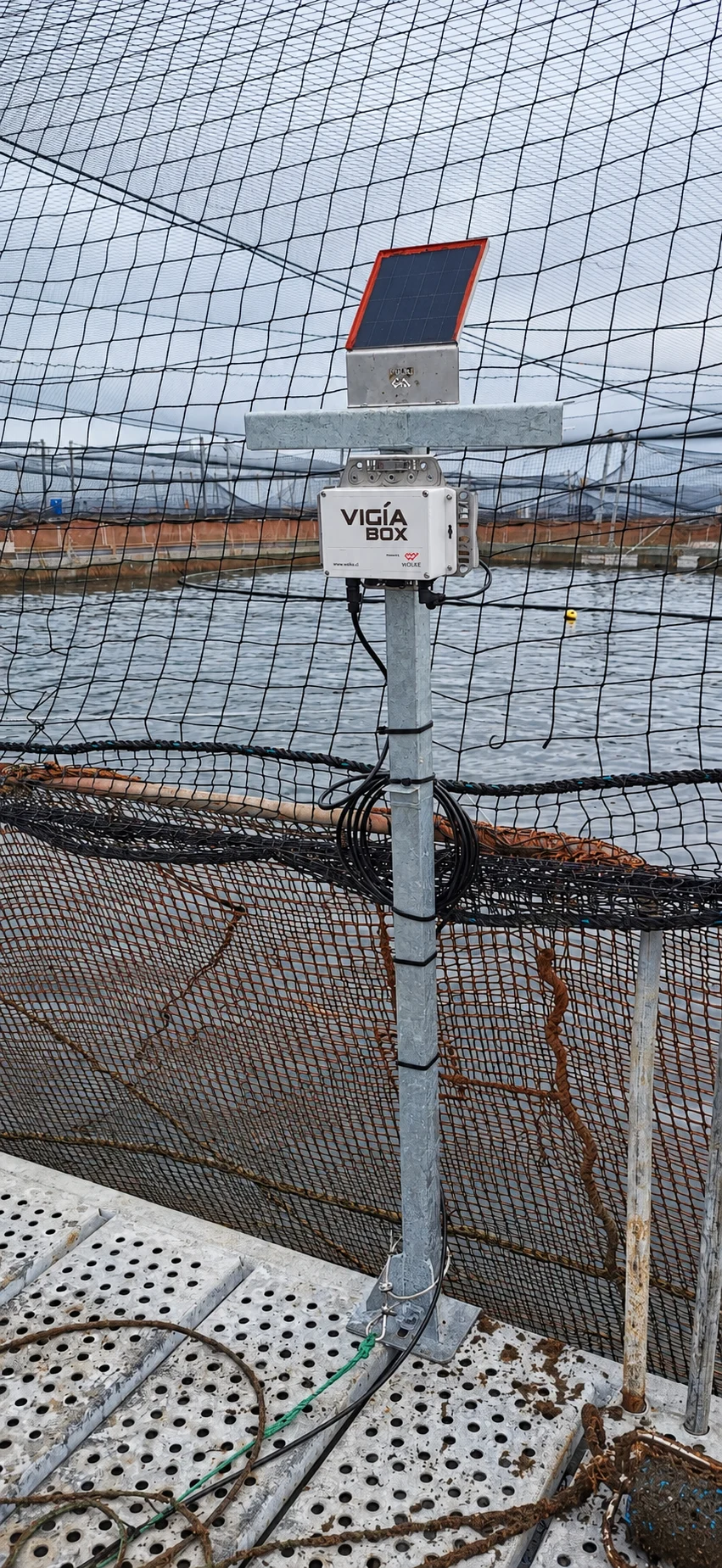
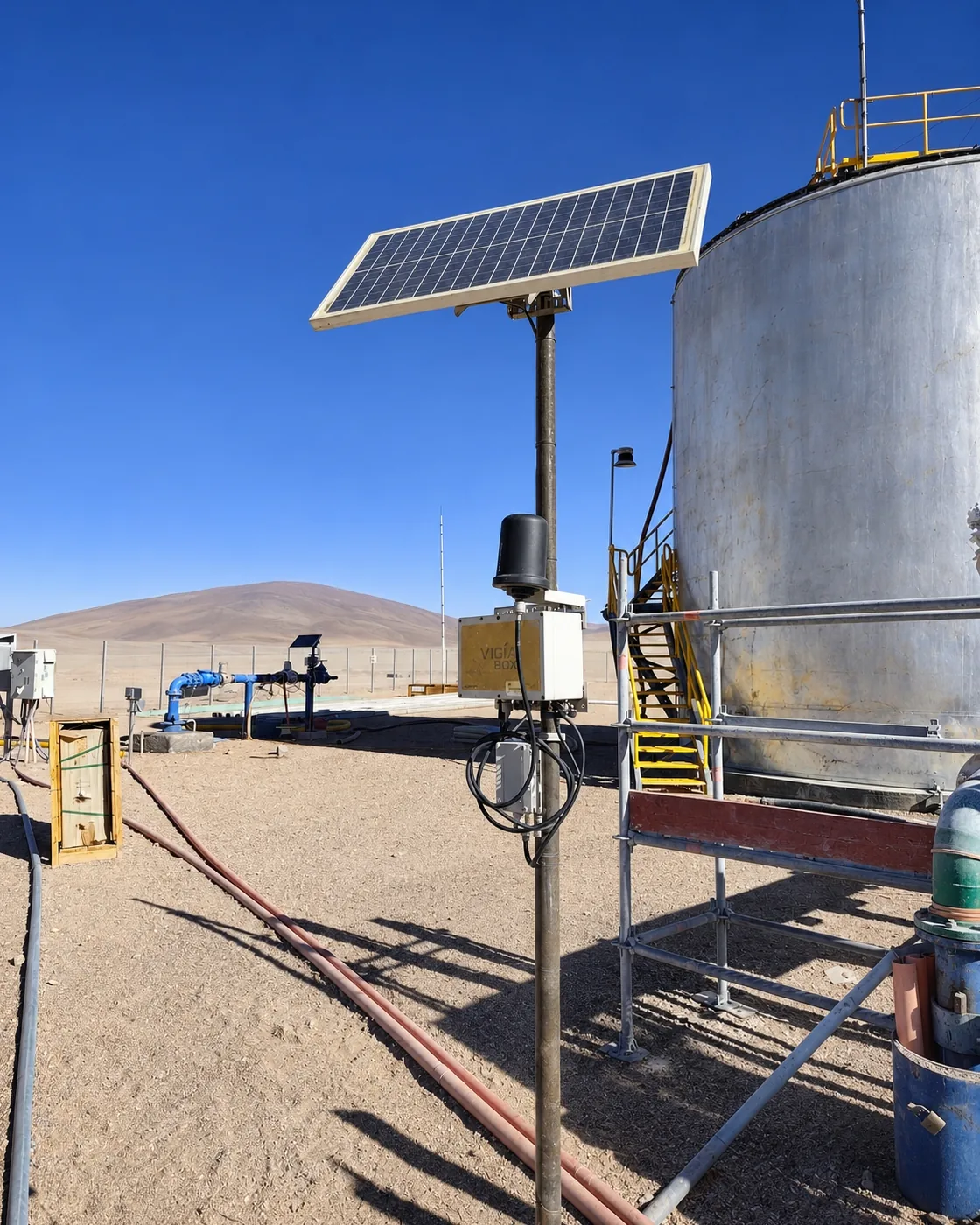
Where there's no cabinet, no outlet, no reliable signal.

A pole, a solar panel, and a VigiaBOX are all it takes to turn a remote spot into a connected measurement point.

03 / Compare models

Core, NEO, and Plus, side by side.

Reference values for each model. We will help you choose based on the signals, power, and network available at your site.

Model CoreDIN-rail RTU NEOField, self-powered PlusExtreme conditions
Form factor DIN rail, for cabinets Field unit Field unit for extreme conditions
Analog inputs 7 × 0–25 VDC; 3 also accept 4–20 mA 4 4, up to 18-bit
Digital inputs 4 opto-isolated · 2 relay outputs 2 opto-isolated, for pulse counting 3 opto-isolated, for pulse counting
Digital instrumentation Modbus RTU master (RS-485) · Modbus TCP · 1-Wire SDI-12 · Modbus RS-485 · optional Modbus TCP and MQTT SDI-12 · Modbus RS-485 · optional Modbus TCP and MQTT
Internal sensors DS18B20 input Temperature and humidity Temperature, humidity, and pressure
Communications Satellite modem · GPS · optional LoRaWAN LoRaWAN · Iridium SBD · 4G LTE, with automatic network failover LoRaWAN · optional Iridium SBD, 4G LTE, and Ethernet
Power 9–36 VDC (5 W max.), battery, and solar panel 18650 battery and solar panel · average draw < 0.1 W Integrated TitanPower, solar panel, or external battery · average draw < 0.1 W
Logging Local, with store-and-forward Up to 26,000 records 43,800 records or more
Protection — IP68 · polycarbonate IP69K (Standard version: IP68)
Temperature −30 to +60 °C — Operates at −30 °C
Dimensions and weight 92 × 99 × 50 mm · < 200 g 0,9 kg 299 × 173 × 90 mm · 3.0 kg (Standard: 1.7 kg)
04 / Continuity

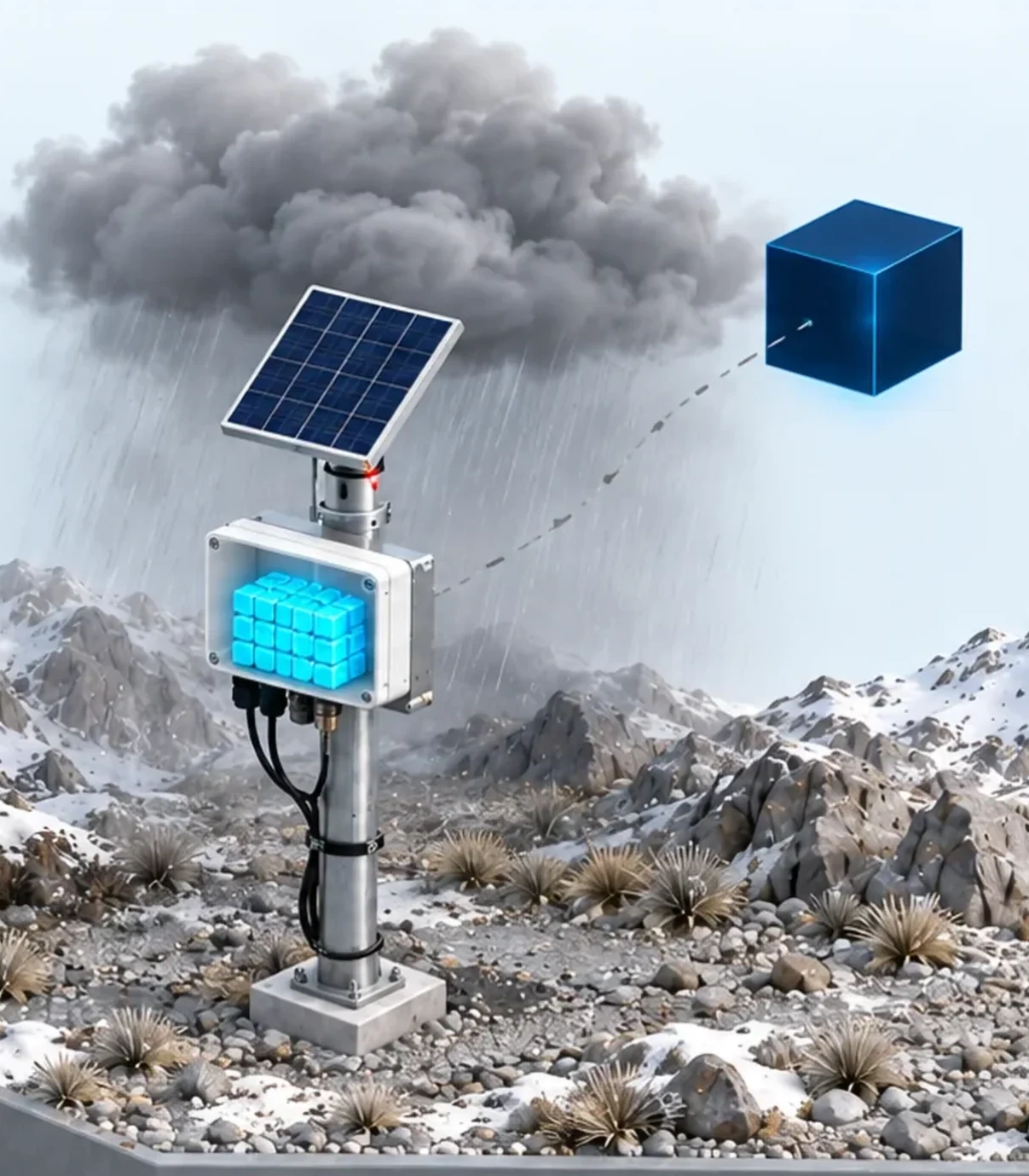
The link drops.
Logging continues.

Every measurement is stored on the device first, with its timestamp. Transmitting is the second step, not a prerequisite for measuring.

Ilustración de una estación VigiaBOX que guarda sus mediciones en el equipo durante un corte de enlace, bajo una tormenta

Timestamped local logging

Non-volatile memory and a real-time clock. Optional GNSS for position and time synchronization.

Automatic store-and-forward

Anything that could not go out stays queued and is sent when the link returns, with no site visit needed.

Two networks, one device

On NEO and Plus, 4G and Iridium coexist in the same unit, which selects the available network automatically.

How it is configured remotely and how every data point reaches your systems: see the architecture on the Technology page

06 / Family specifications

What all models have in common.

Interfaces, networks, and power are chosen by model and by project, on the same logging and integration foundation.

Device type RTU, data logger, and telemetry in a single unit
Models Core, NEO, and Plus (Plus also in a Standard version)
Inputs Analog voltage and 4–20 mA; digital for pulses and status signals
Digital instrumentation SDI-12, Modbus RTU (RS-485), and Modbus TCP; 1-Wire on Core
Communications 4G LTE, LoRaWAN, Iridium SBD satellite, and Ethernet, depending on model
Local configuration USB and Bluetooth
Logging Non-volatile memory with real-time clock; optional GNSS; automatic store-and-forward after an outage
Power Solar panel with battery, TitanPower, or external 9–36 VDC supply (Core)
Protection IP68 (NEO and Plus Standard) · IP69K (Plus)
Integration Connection Broker to GeoVigía or your systems: REST API, MQTT, webhook, or Azure Service Bus

What happens if the link drops?

VigiaBOX keeps measuring and stores every record in non-volatile memory. When the link returns, it resends what is pending.

Can I connect instruments from other manufacturers?

Yes: analog signals, pulses, SDI-12, and Modbus. We verify each instrument before installation.

Which model do I need?

Core mounts on a DIN rail inside a cabinet; NEO runs on battery and solar power in the field; Plus adds IP69K and an integrated TitanPower supply.

How is it configured?

In the field, over USB or Bluetooth. Once installed, it can be adjusted and diagnosed remotely.

Let's talk

Which instruments do you need to connect?

Tell us what signals you have, how much power there is on site, and which network is available. We will recommend the model and configuration.

Let's talk about your instruments