
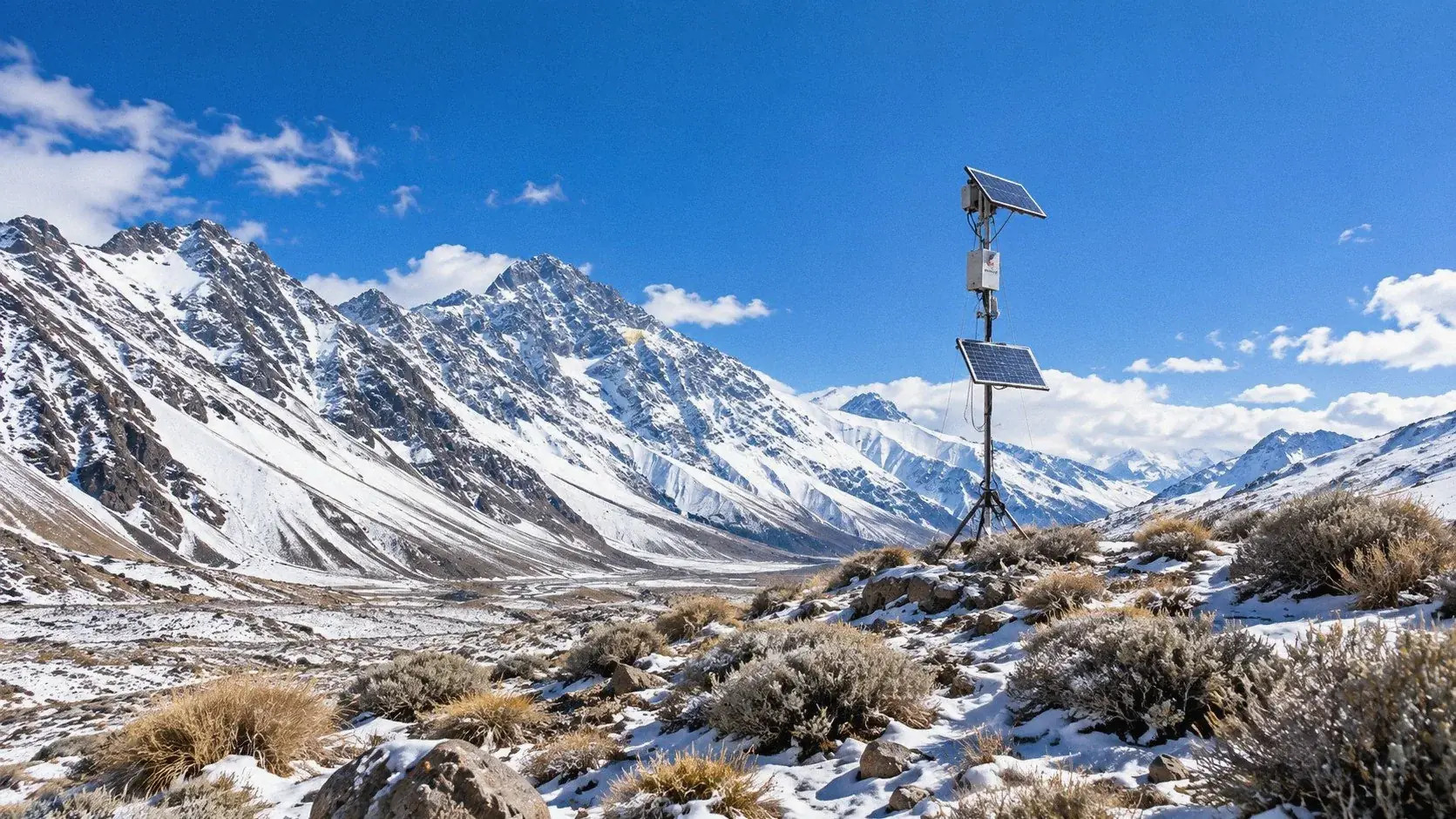
Process signals
4–20 mA, pulse, and status inputs.
Analog readings, counts, and discrete signals: flow, level, and equipment status.
We connect instruments, log their measurements, and deliver data your operation can use. One common foundation for water, geotechnical, and industrial-asset monitoring, without relying on any single network or platform.
Interfaces and networks supported by the VigiaBOX family.
A piezometer, a water sonde, and a temperature node speak different languages. We keep acquisition, communications, and data delivery separate, so adding a new source does not mean redoing the integration.
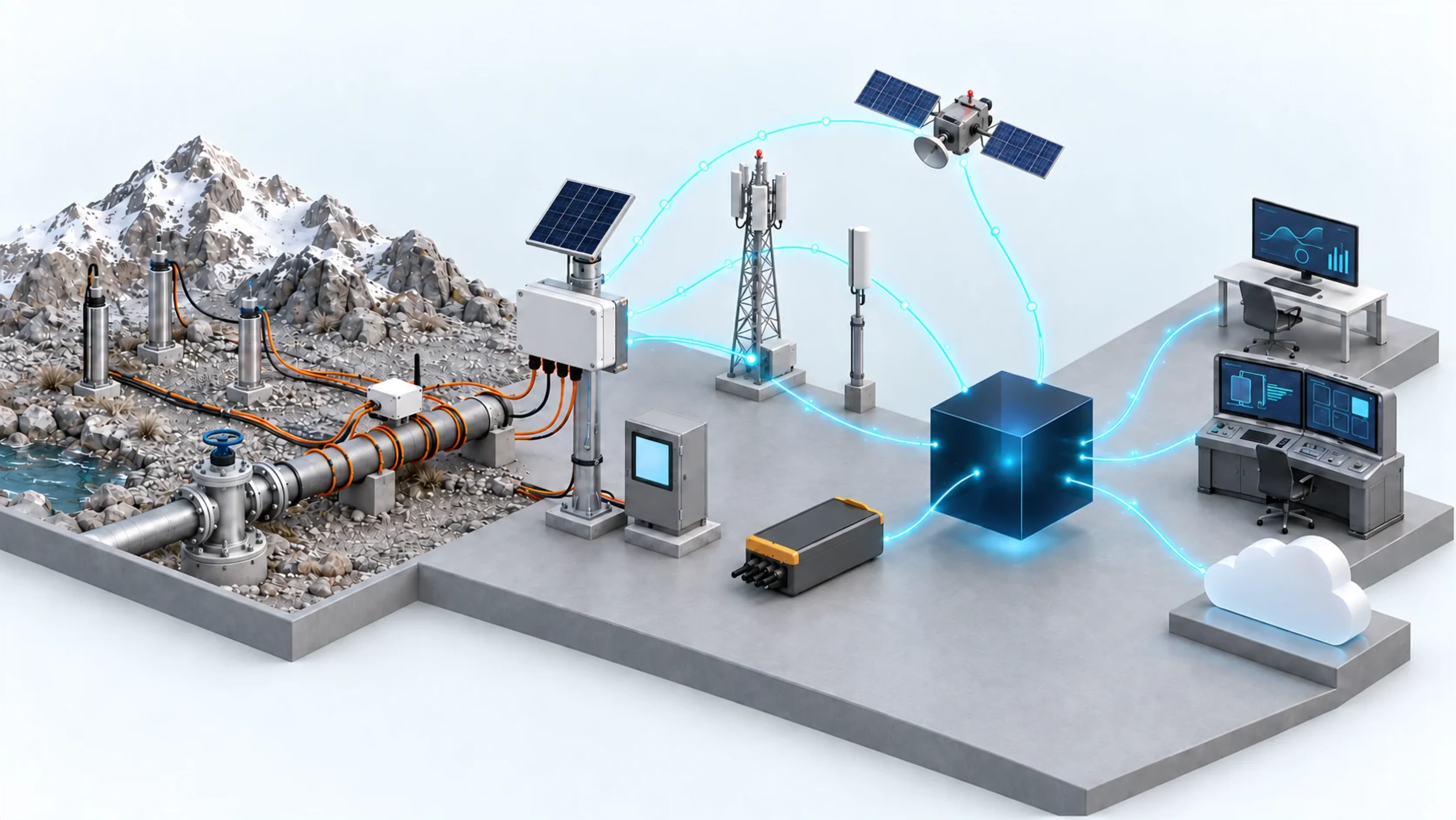
Instruments
VigiaBOX
Local HMI
Site network
RokkaBOX
Connection Broker
Your operation
Instruments
Piezometers, wells, and heat-traced lines, ours or third-party.
VigiaBOX
Reads every instrument, logs on site, and resends after an outage.
Local HMI
Runs the zone from the enclosure, even if the link drops.
Site network
4G, LoRaWAN, or satellite, depending on coverage and power.
RokkaBOX
VigiaBOX in a geotechnical configuration, for vibrating wire.
Connection Broker
Identifies the source, keeps the original, and delivers.
Your operation
GeoVigía, SCADA, or your cloud, over REST API, MQTT, or Azure Service Bus.
You don't need a Wolke device at every source: the Broker also takes in sources that already transmit.
VigiaBOX, our family of data acquisition, logging, and telemetry devices, reads the signals on site and prepares them for a common data architecture. Explore VigiaBOX
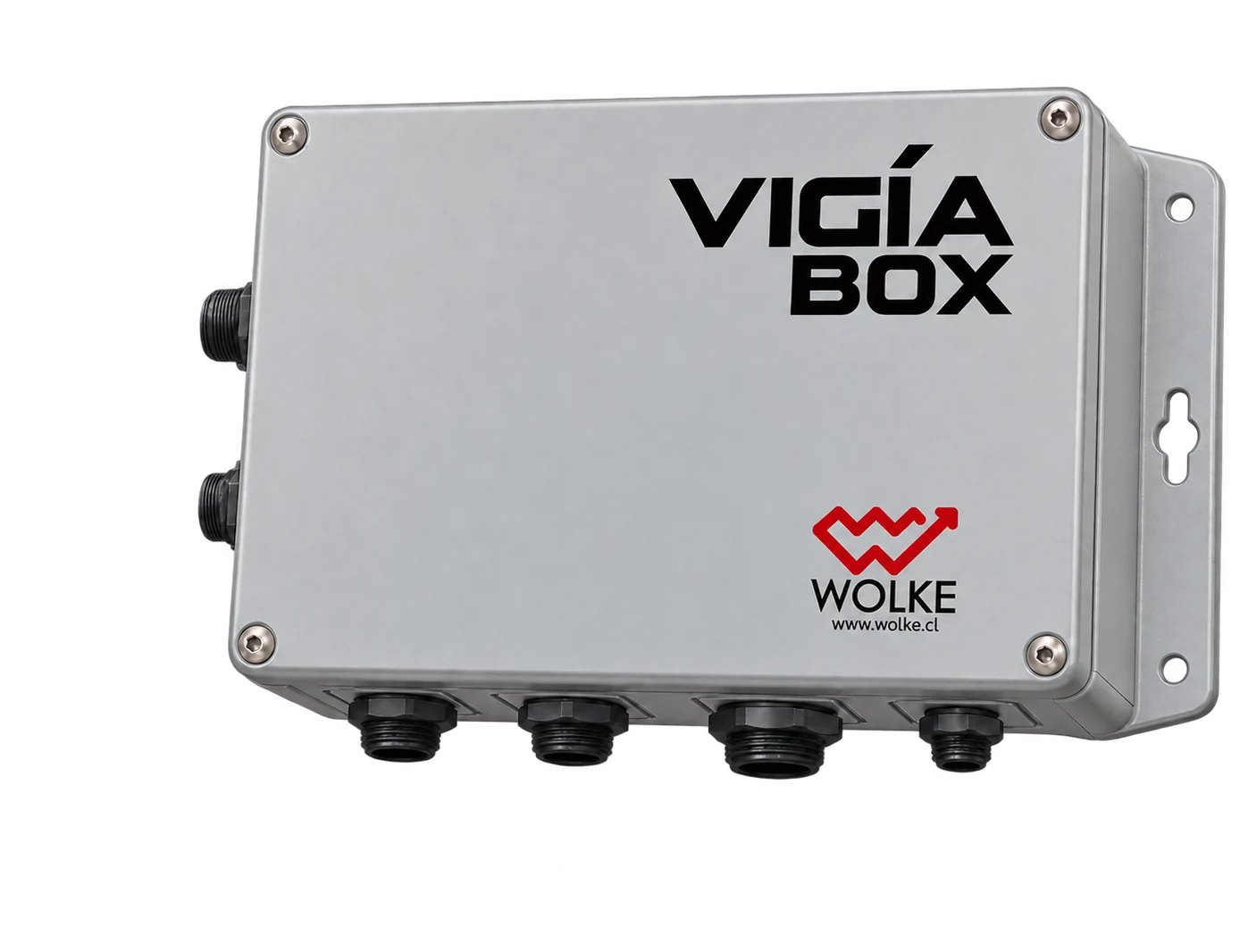
Analog readings, counts, and discrete signals: flow, level, and equipment status.
Third-party sondes, meters, and stations, with reading and interpretation configured per instrument.
ThermoGuard nodes and third-party BLE sensors: more measurements without wiring every signal back to the gateway.
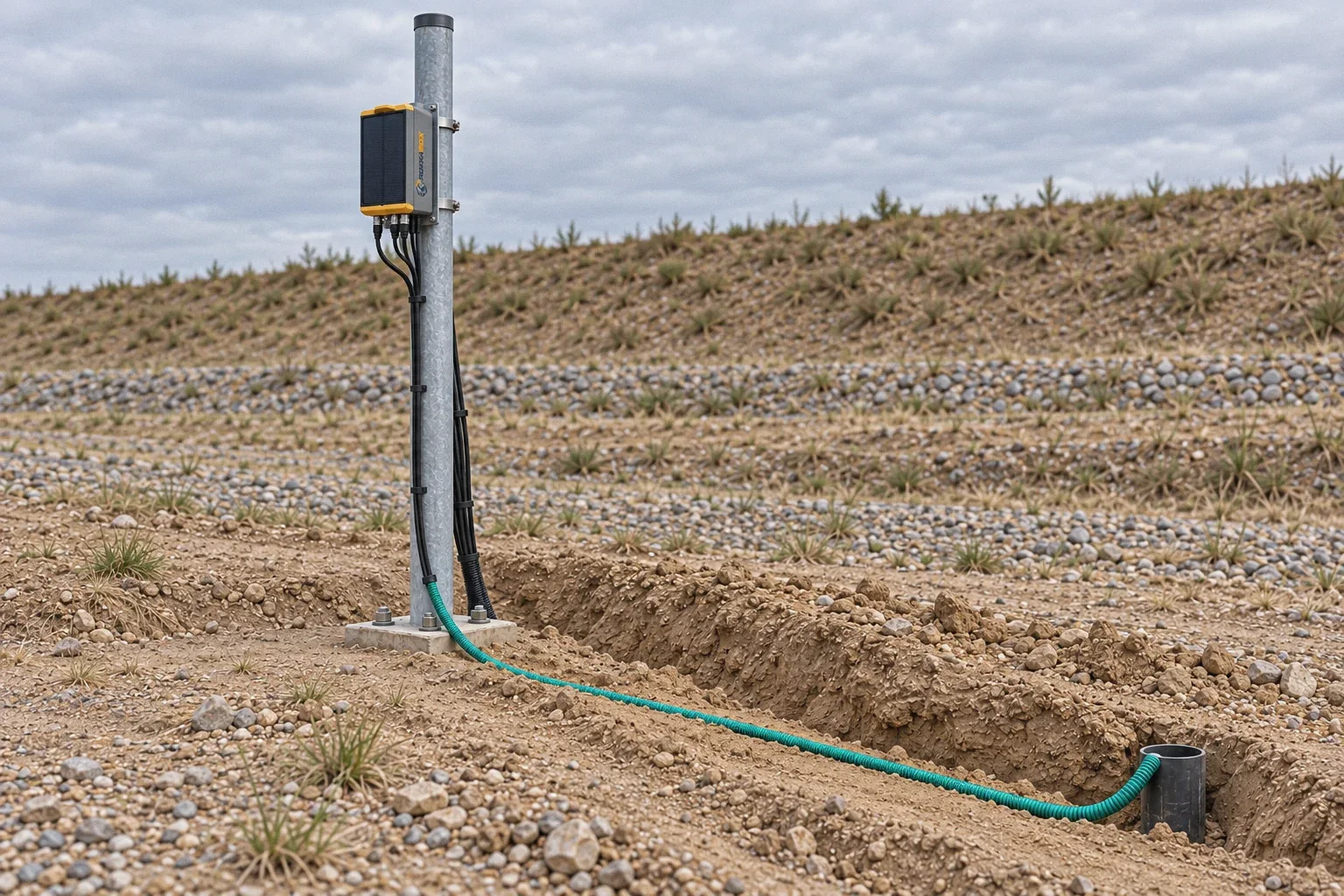
RokkaBOX extends the VigiaBOX family to piezometers and other vibrating-wire instruments.
Four vibrating-wire channels per RokkaBOX. Geotechnical data acquisition, local logging, and delivery to the mine site's systems.
Each reading carries the instrument's identity, timestamp, reference values, and calibration, so the monitoring record keeps its context.
A mine site with cellular coverage, a remote lagoon, and a distributed instrument network are not the same problem. We combine networks point by point, based on distance, power consumption, and available service.
Telemetry from sites with cellular coverage, without relying on your local network.
The most common network at mine sites.Both networks in one device: if cellular is unavailable, the data goes out over satellite.
Automatic network switching.Long-range, low-power radio for networks with many points; a gateway collects the data and sends it on.
Environmental sensors and distributed networks.Telemetry where there is no terrestrial coverage, as the primary link or as backup.
Backup when no other network is available.BLE for nodes and on-site diagnostics. Ethernet when the device sits on the plant network; Wi-Fi if the project calls for it.
The Broker decouples how each device sends its data from how your system receives it. It preserves the original message, interprets the variables, and delivers them to one or more destinations: your platform keeps a stable data contract, and the next sensor is integrated at the edge.
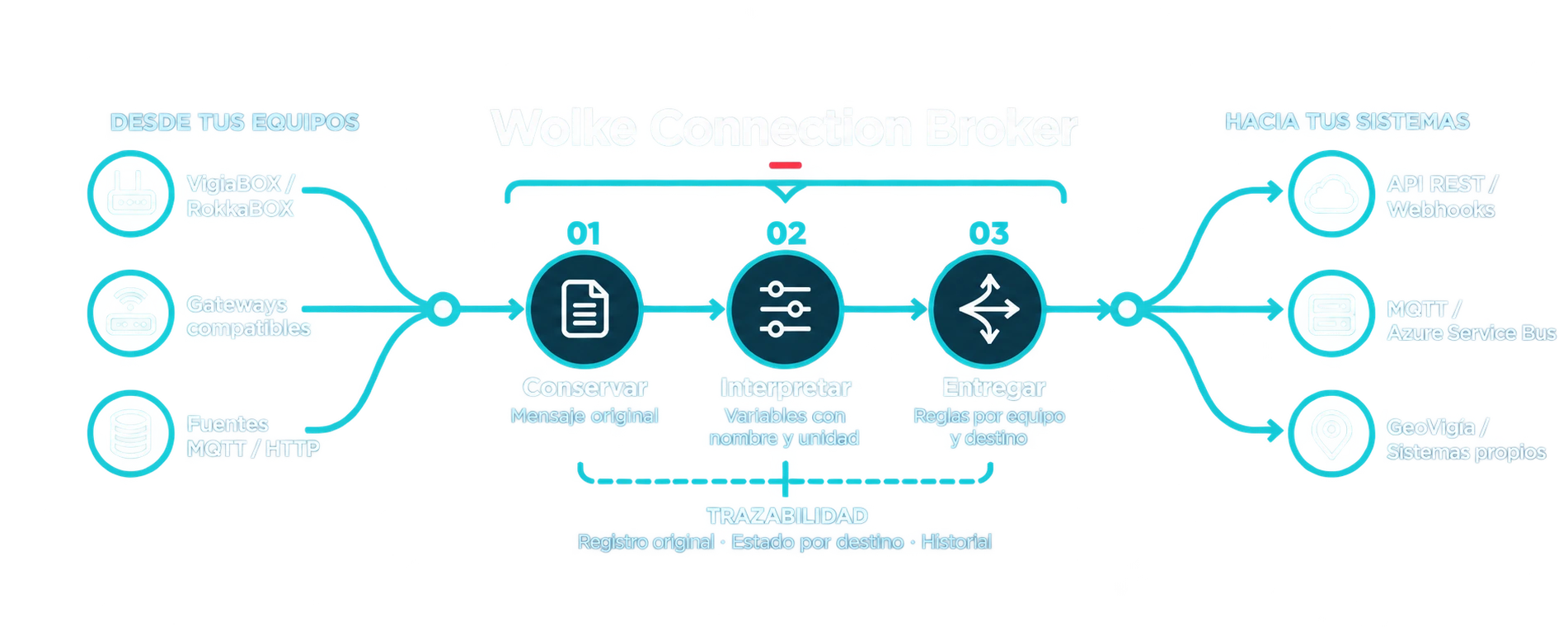
Identidad · Decodificación · Grupos y reglas
The received message and its interpretation are stored separately, so the original can always be reprocessed.
A decoder for each device turns every format into named variables with units.
Each device or group delivers to its assigned destinations, under its own rules.
Each delivery records its status, attempts, and response, so you can tell a source failure from a receiver failure.
The device is commissioned on site, with no data coverage needed. Once installed, it is configured, diagnosed, and updated remotely. Fewer field visits.
Scanning, signal readings, status, and configuration from an Android app, without relying on cellular coverage.
Configuration read and write, remote commands, and a trace of every message.
VigiaBOX receives on two antennas and reports the signal on each. That way you can tell a weak-coverage area from a faulty sensor.
Data backup, power, and diagnostics are part of the same system. Continuity takes more than choosing an antenna.
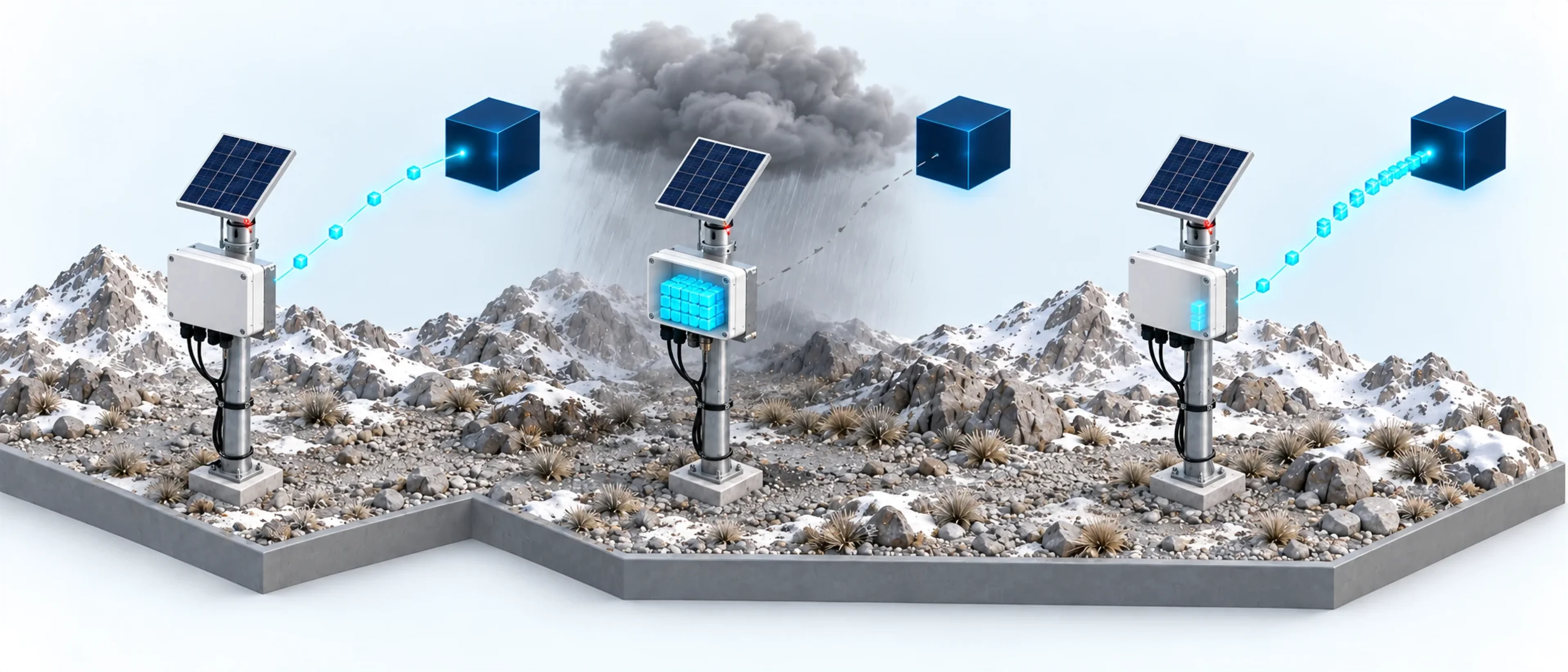
Normal link
Link outage
Link restored
Normal link
Each measurement goes out to the platform as soon as it is taken.
Link outage
The device keeps measuring and stores every record on site.
Link restored
Resends the backlog in order, with its original timestamps, and confirms it reaches its destination.
Recovering historical data is no substitute for a timely alert. If the system stops acquiring data because it runs out of power, it cannot reconstruct measurements it never took. That is why we size the solar panel, batteries, and backup to the sensors, power consumption, climate, and operating cadence.
Use GeoVigía, our monitoring and reporting platform, or receive the data in your own systems. Acquisition, the Broker, and visualization are separate pieces, so you do not need to change your platform.
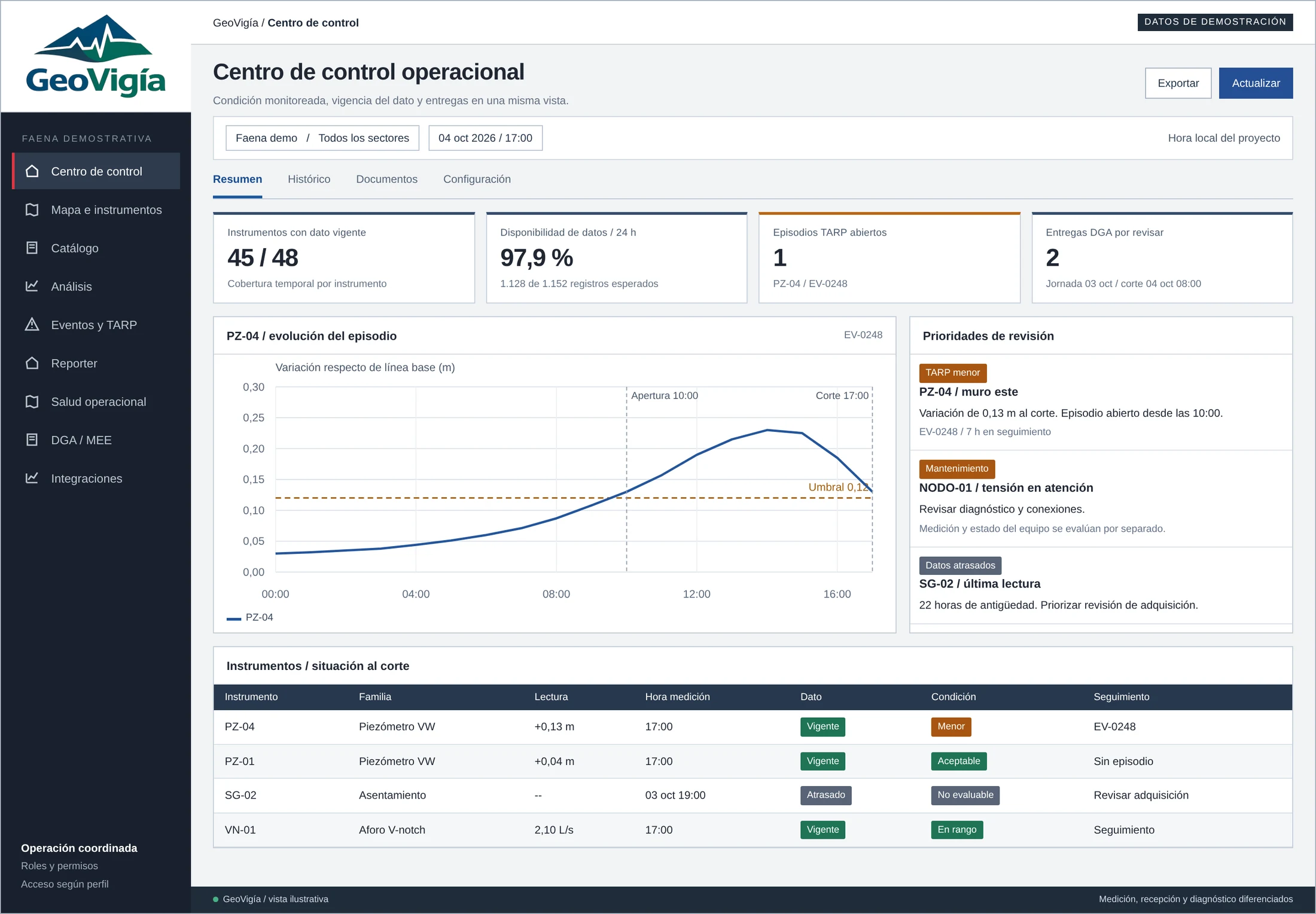
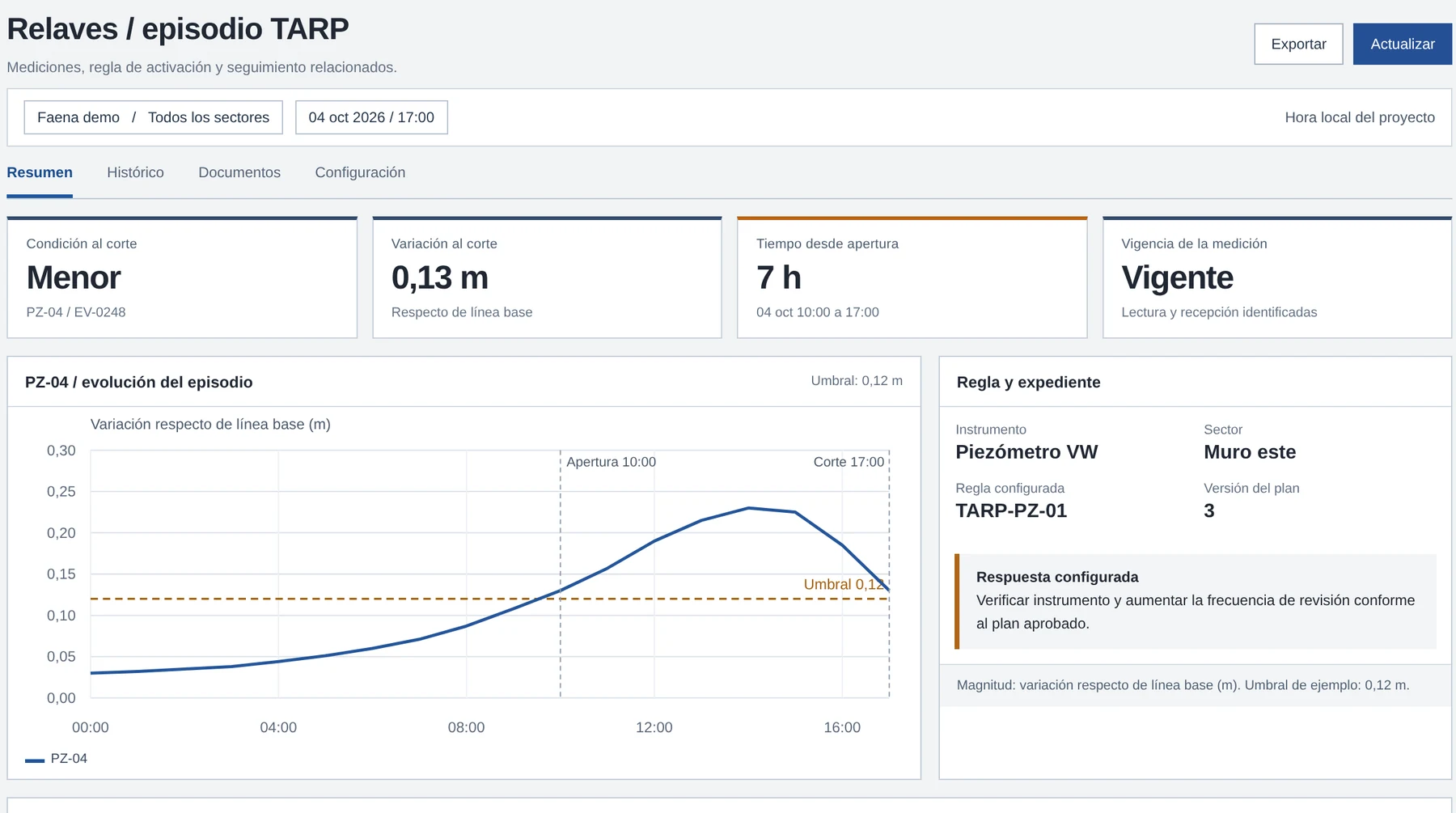
Control center, historical data, TARP events, reconciliation with the DGA (Chile's water authority), and automatic reports by email, PDF, or Excel. Deployed in the Wolke cloud, on-premises, or hybrid.
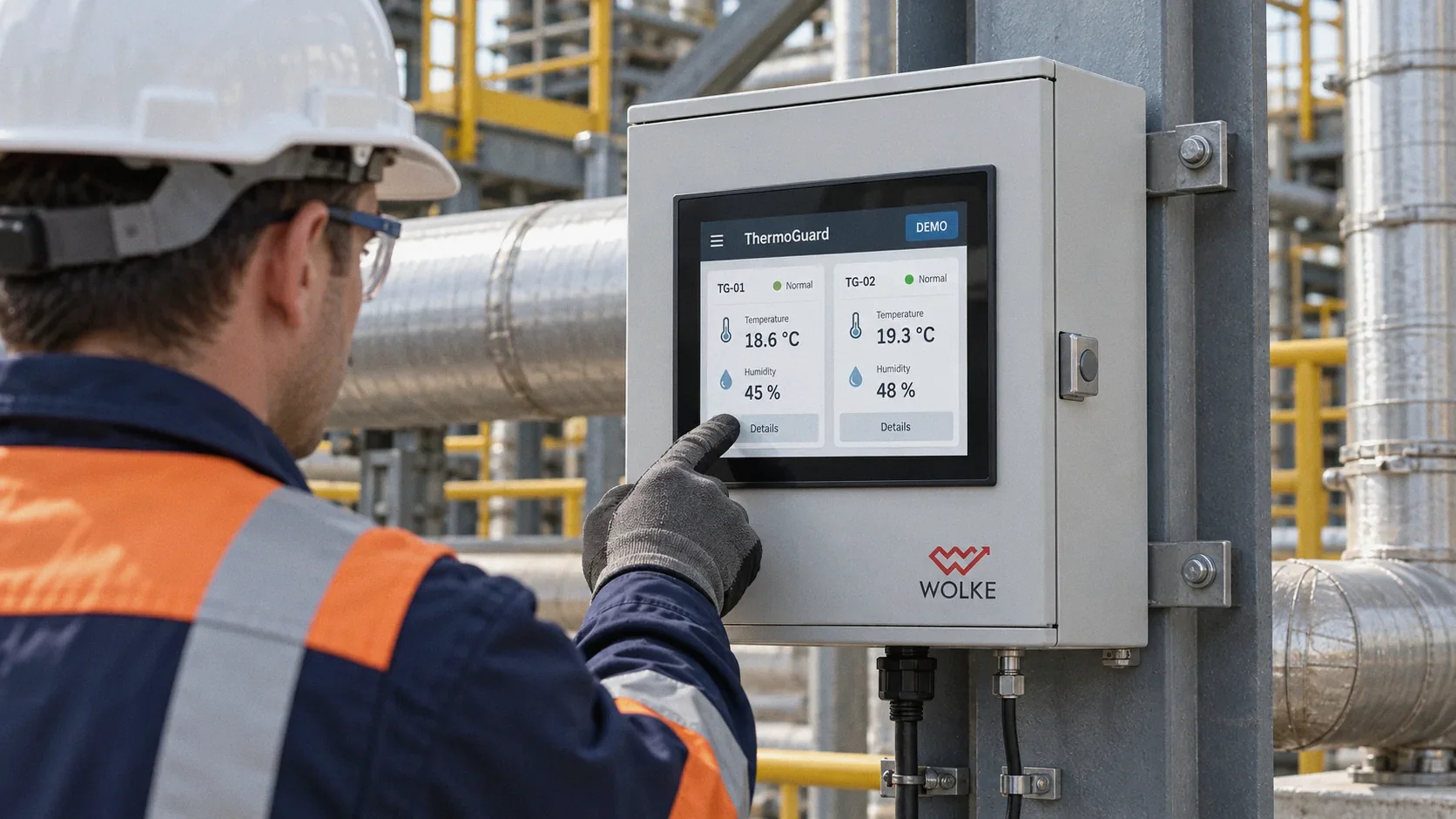
A screen on the enclosure to operate the zone even if the link goes down.
Delivery via REST API, webhooks, MQTT, or Azure Service Bus, with delivery status for each destination.
Your data travels through field devices, public networks, and the cloud. We protect each stage with controls your cybersecurity team can review.
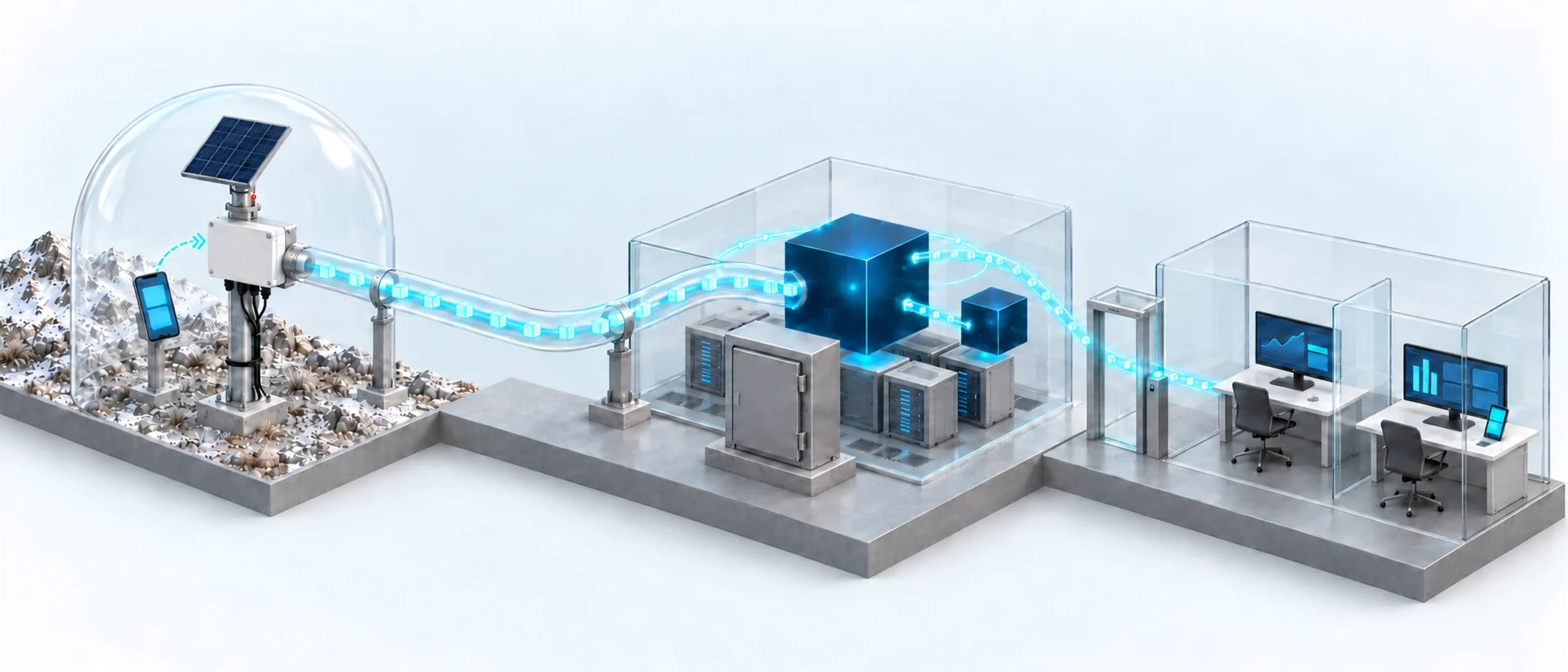
Device
Link
Cloud
People
We assess vulnerabilities with Microsoft Defender for Cloud, centralize logs in Azure Monitor, and get alerts before a certificate expires.
Implementation in progress: our information security management system.
Technical documentation of our architecture and controls for your cybersecurity team. Write to us
Device and link controls are enabled according to the model, firmware, and configuration used in each project.
Tell us what you need to measure, what the site is like, and where the data needs to go.